在同济大学2025 AI4Cities Workshop中,SyncPlan小组以同济新村快递站点建设为案例,探索了利用各种智能技术实现人机交互的社区微更新规划应用。
我们采用YOLO v11对社区街景进行分析,识别快递运输可能引发人车冲突的路段;通过实地考察和访谈筛选潜在可行的快递站点建设空间,并使用720全景照片进行记录。
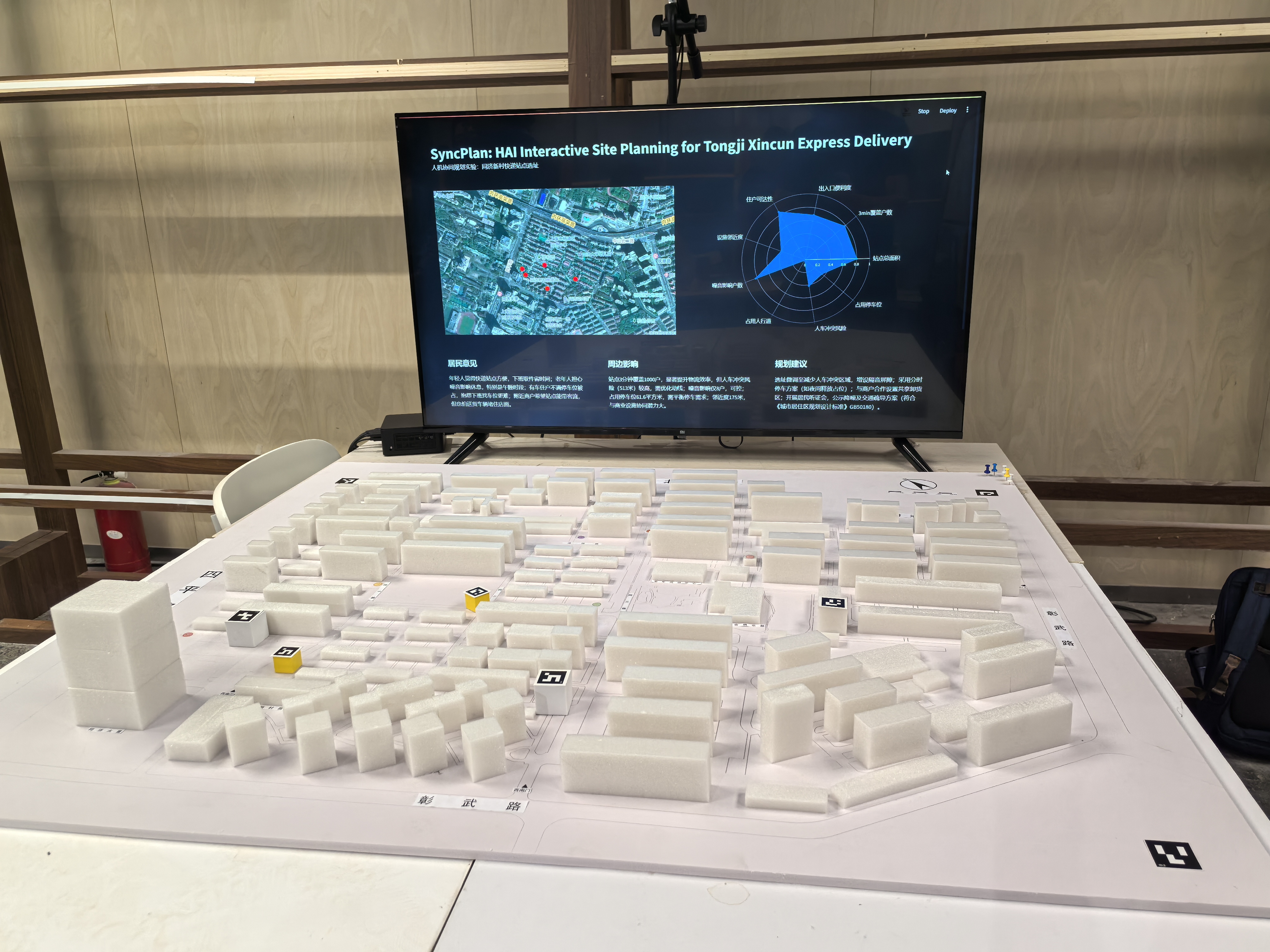
通过集成各类计算机视觉和空间分析算法,最终建立了一个基于实体模型的人机交互选址系统,用户可以在实体模型上放置快递站点,系统实时通过摄像头识别选址方案,
并从居民可达性、入口便利性、人车冲突、噪音影响、占用停车位等9个方面予以评价,
并可以通过全景照片查看候选位置的现状情况,从而为居民协商提供定量化支撑。
随着我国城市发展进入存量更新阶段,大量社区面临设施增补、环境提升等微更新需求。
微更新过程涉及大量居民协商,也面临空间有限、需求多元等复杂条件。
我们认为,建立人机交互的社区更新规划支持平台,为协商提供实时的定量支撑,能够有效的支持共识构建与规划决策。
In the Tongji 2025 AI4Cities Workshop, the SyncPlan team used a parcel station project in Tongji New Village as a case to explore how smart technologies can support human–computer interaction in community micro-renewal.
We used YOLO v11 to analyze street views and identify spots where delivery might cause pedestrian–vehicle conflicts.
We also carried out field surveys and interviews to find feasible locations, and documented them with 720° panoramic images.
By combining computer vision and spatial analysis, we built an interactive site-selection system based on a physical model.
Users can place a parcel station on the model, and the system recognizes the location in real time and evaluates it across nine factors, such as accessibility, entrance convenience, conflicts, noise, and parking impact.
Panoramic images are also available to show the current conditions of each site, helping support community discussions.
As cities in China shift toward renewal of existing areas, many communities face demands for facility upgrades and improvements.
With limited space and diverse needs, we believe an interactive planning support platform can offer real-time, data-driven input to support consensus and better decisions.
小组成员:刘苏 苗馨月 李璐 文星天 黄馨怡 许嘉琪 杨曼颀 赵峰 赵珈蕴 郑韵致
指导:晏龙旭 张钰 刘依秾
指导:晏龙旭 张钰 刘依秾