在城市交通拥堵与碳排放压力日益加剧的背景下,共享出行被广泛视为提升出行效率、减少车辆使用与降低环境负担的重要路径。
相比单人出行,拼车出行(ride sharing)通过合并具有相似时空需求的出行请求,有望显著减少车辆行驶里程与能源消耗。
然而,其实际效果并不只取决于技术平台或用户意愿,更深层地受到城市空间结构与交通系统运行机制的制约。围绕这一问题,我们团队开展了一系列
面向“共享出行潜力(Ride-Shareability)”的城市建模研究。
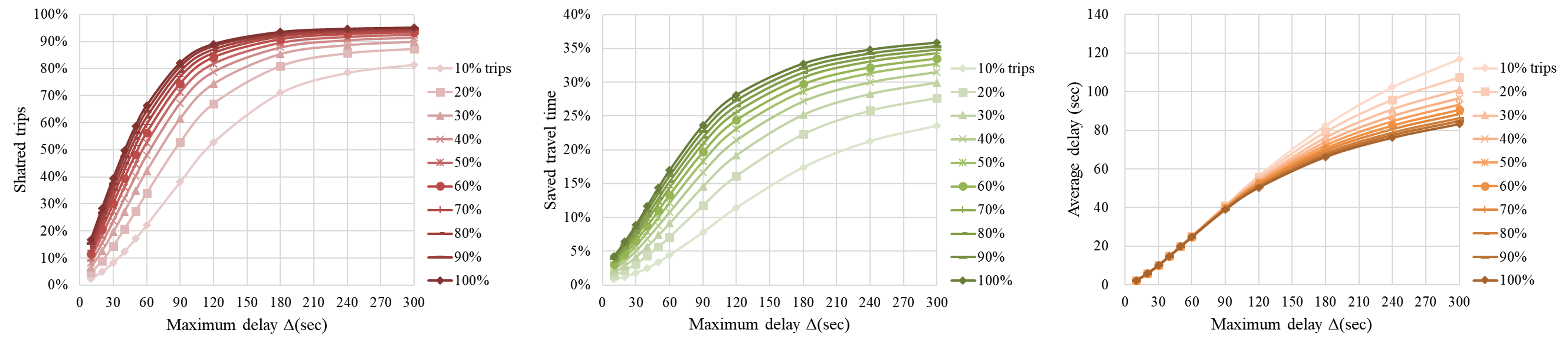
我们以百万级出租车轨迹为基础,将个体出行转化为可计算的“共享网络”,通过优化算法求解全局最优拼车方案,从而刻画城市中出行可被共享的理论上限。
在此基础上,引入多尺度统计模型与可解释机器学习方法,系统分析建成环境(密度、功能混合、中心结构、交通运行等)对拼车潜力的影响及其非线性机制。
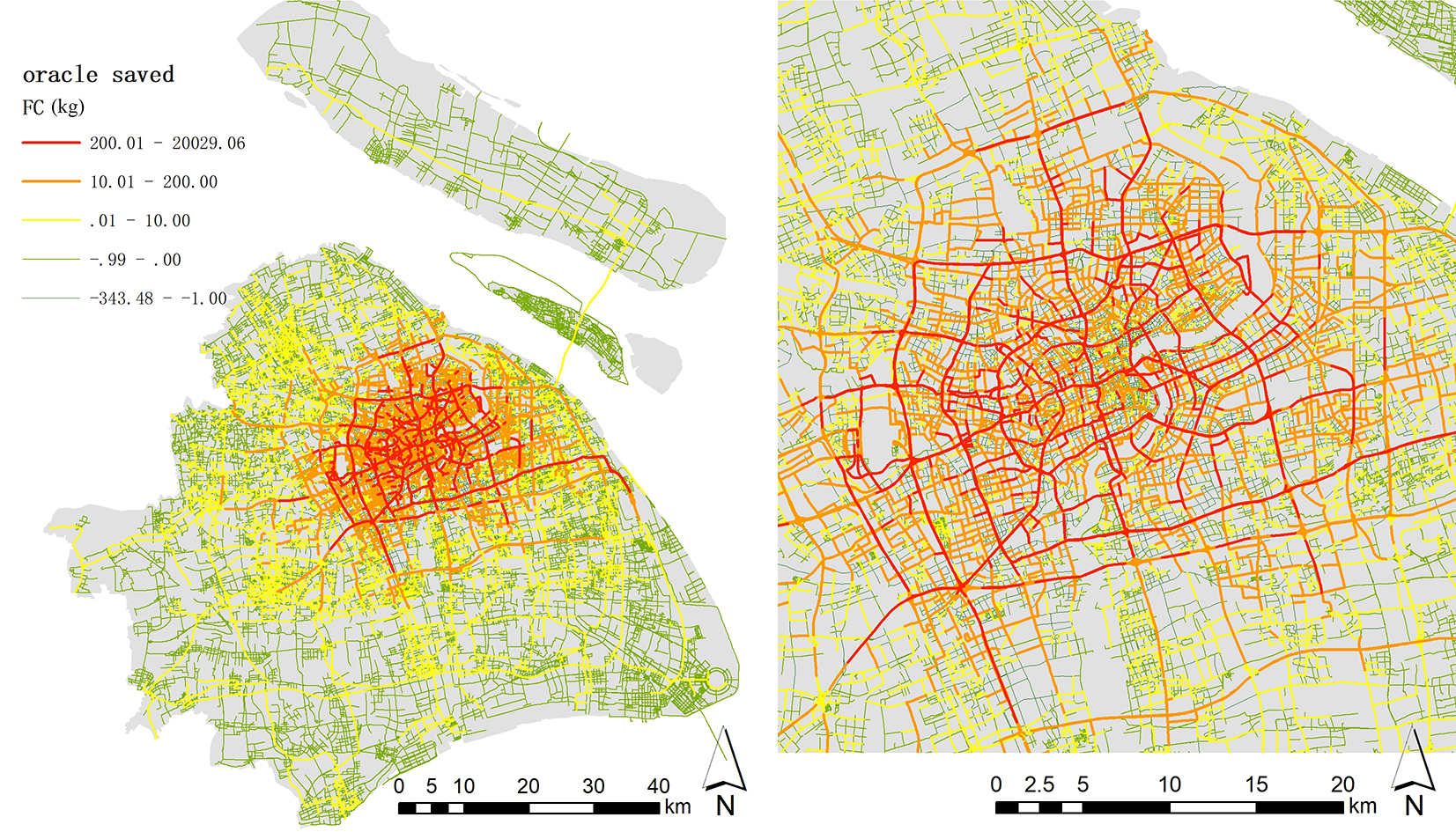
同时,将优化后的出行方案嵌入交通排放模型与速度—流量关系模型中,评估共享出行在真实道路网络中的减排效应与空间分布特征。
Amid rising congestion and carbon emissions, shared mobility is widely seen as a key pathway to improve efficiency, reduce vehicle use, and lower environmental impacts. Compared with single-occupancy travel, ride sharing pools trips with similar spatiotemporal demands, offering substantial reductions in vehicle miles traveled and energy use.
However, its effectiveness is fundamentally shaped by urban spatial structure and transport system dynamics, beyond platforms or user preferences. To address this, our team conducts urban modeling research on “ride-shareability.”
Using large-scale taxi trajectories, we construct a shareability network and solve for optimal matching to estimate the upper bound of shareable trips. We then combine multi-scale statistical models and explainable machine learning to examine how built environment factors—density, land-use mix, spatial structure, and traffic conditions—affect shareability and its nonlinear patterns. Finally, we integrate optimized trip configurations with emission and speed–flow models to assess the environmental impacts and their spatial distribution.